
Crypto payments are increasingly used for cross-border business. Freelancers invoice international clients. Small companies pay overseas contractors. Stablecoins offer fast settlement and predictable transfers.
Yet when crypto appears in the payment flow, accountants often ask one question:
How is this going to be reported?
This guide explains how to structure crypto payments so they fit cleanly into your accounting system — without creating friction, uncertainty, or audit stress.

From an accounting perspective, clarity and consistency define how any payment is evaluated. Each transaction must clearly show its business purpose, reflect a defined fiat value at the moment of payment, and provide a verifiable transaction trail that can be reconciled. It also needs to be treated consistently across reporting periods. Once these structural elements are in place, the payment rail simply becomes another way funds move, integrated into the same financial framework.
Step 1: Always Connect Crypto to Proper Documentation
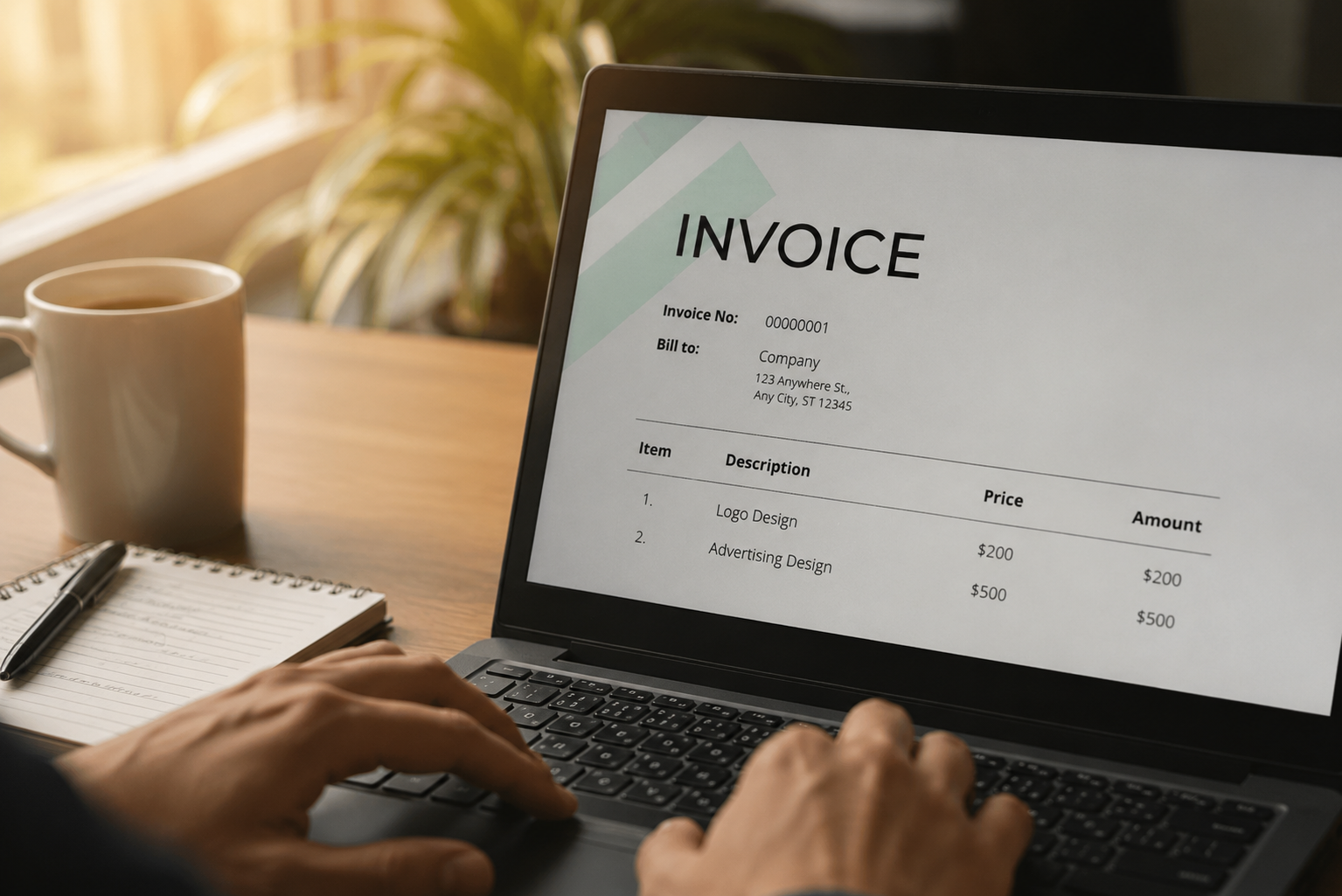
Every crypto payment should be supported by the same documentation standards as any other business transaction. This includes a formal invoice or contract, a clear payment reference, the blockchain transaction ID, and a recorded fiat equivalent captured at the time of payment.
Blockchain transactions reflect the movement of funds. Accounting requires that each transfer is tied to a defined business purpose and recorded within the company’s financial documentation. Linking the transaction ID directly to the relevant invoice or agreement ensures that the payment can be reconciled clearly and reviewed without ambiguity.
Step 2: Define How you Calculate the Fiat Value
Valuation is often where uncertainty appears.
If you receive 2,000 USDT, the accounting record needs a clear fiat amount. This requires defining which exchange rate is used, at what moment it is captured, and which source determines it.
An internal rule should specify the rate source, the timing of valuation, the currency of record, and how the amount is stored in accounting software. Once defined, the method should be applied consistently across reporting periods.
Consistency in valuation supports predictable and defensible reporting.
Step 3: Separate Business and Personal Wallets
Maintaining a dedicated business wallet strengthens financial structure from the start. A separate wallet improves transaction traceability, supports clearer tax reporting, and makes audit reviews more straightforward by keeping business activity distinct and identifiable.
When business and personal funds are kept apart, reconciliation becomes simpler and financial records remain organized. Clear separation supports clean reporting and reduces avoidable complexity.
Step 4: Understand Custody and Non-Custodial Models
Accountants often focus on one practical question: who controls the funds at each stage of the transaction.
When a provider holds assets on behalf of users, the assessment naturally includes additional considerations around safeguarding, access controls, and internal oversight. When the setup is non-custodial and the business retains control of its own wallet, the risk profile and control structure are evaluated differently.
Clearly documenting how funds are held and who has access to them allows accountants to assess the model accurately and within the correct operational context.
Step 5: Create a Short Internal Crypto Payment Policy
A written policy aligns finance, operations, and external advisors around a shared understanding of how crypto payments are handled.
The document can describe which assets are accepted, how valuation is determined, how transactions enter the accounting system, how reconciliation is performed, and which wallets are designated for business activity. Clear documentation turns crypto payments into a defined operational process rather than an informal exception.
A concise internal policy strengthens internal control and supports audit readiness by demonstrating structured oversight.
Step 6: Maintain Reconciliation Discipline
Crypto transactions require the same reconciliation discipline as any other payment method. Each payment should be matched to an invoice, recorded with its timestamp and fiat value, and reflected accurately in the accounting system. Transaction reports should allow blockchain records to align clearly with bookkeeping entries.
Consistent reconciliation reduces discrepancies and supports reliable financial reporting. A structured reporting process helps maintain accuracy and predictability across accounting periods.
Once internal structure is defined, infrastructure becomes decisive. Payment systems that capture accounting data at the moment of transaction reduce manual reconciliation and improve consistency.
In DMaple, fiat equivalents are fixed at the time of payment, exchange rates are recorded systematically, and transaction data is exportable in formats suitable for accounting workflows. Each transaction remains linked to its business reference, which supports clean reconciliation and internal oversight.
This design reduces back-and-forth between operations and accounting and shortens the time required to prepare reports.


If you use stablecoins in your business, one core consideration remains: can your accountant review the transaction using standard documentation?
That includes the invoice, the fiat value at receipt, the exchange rate applied, and a clear reconciliation record. Consistent documentation allows crypto payments to be processed within established accounting procedures.
When evaluating a payment rail, consider how transaction data is captured, how reports are generated, and how easily your accounting team can work with them. The right infrastructure allows crypto payments to operate at business speed while remaining fully compatible with accounting discipline.


New at DMaple Blog

The Hidden Cost of Running a Small Business
A contractor finishes a project for a company overseas. The payment is sent, the invoice is marked as paid, and the work is done.
Learn more

DMaple at Get Connected by Intuit QuickBooks 2026
On June 17–18, DMaple participated as an official sponsor of Get Connected by Intuit QuickBooks in Toronto.
Learn more
Your First Payment From An International Client: What To Agree On Before You Invoice
You've agreed on the project. The scope is clear, the timeline is set, and the client is ready to start.
Learn more